

Altars or Stone Circles
On Waiting, Courage, and the Wisdom to Know the Difference

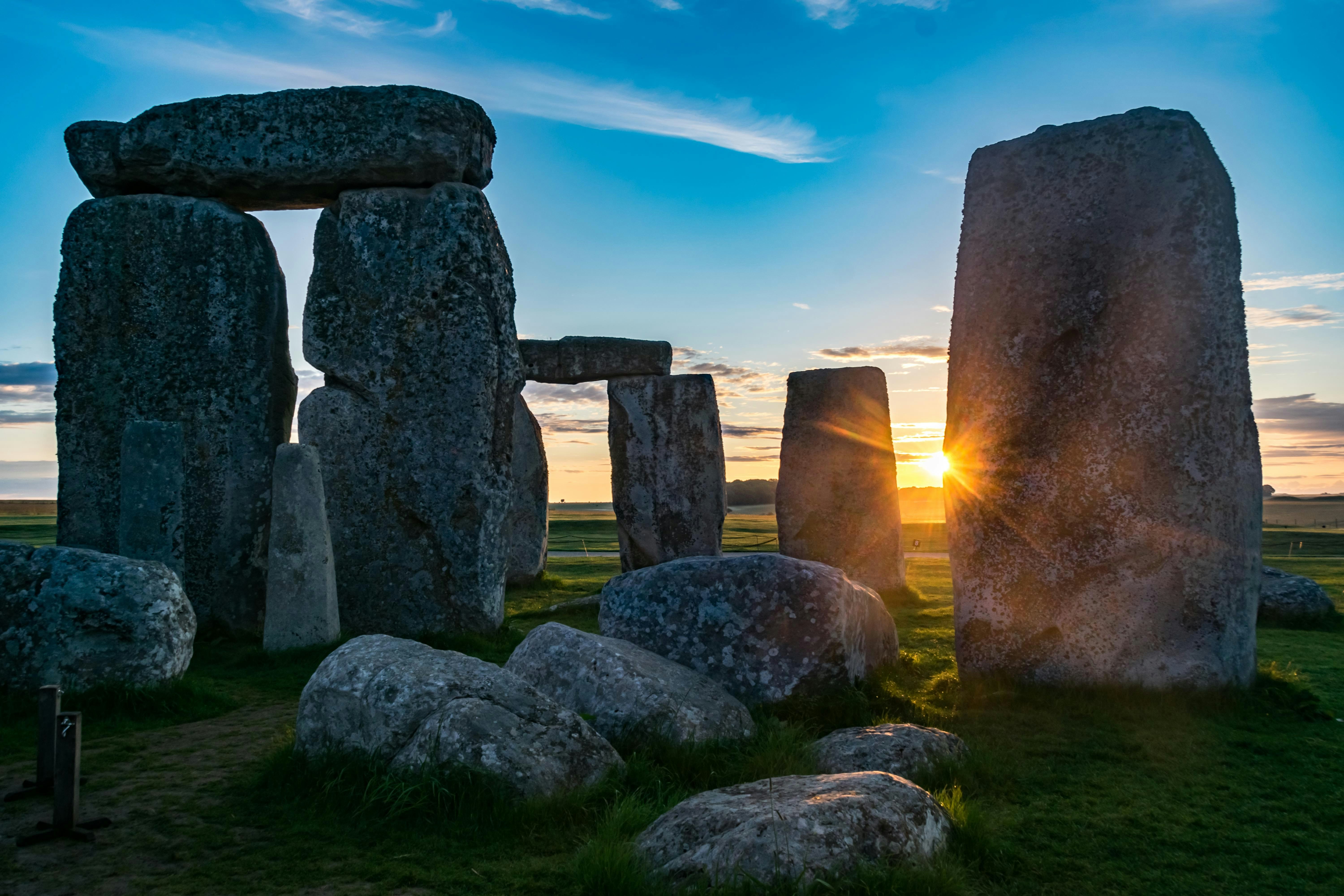
Today is the solstice—the longest dark before the light begins its return.
For most of human history, the solstice terrified us. People believed that if they didn’t do something, the sun might not come back. And so they built altars. They offered sacrifices. Sometimes animals. Sometimes crops. Sometimes—horrifically—each other.
The underlying belief was simple and very human:
If the world feels uncertain, we reach for the hope that effort, sacrifice, or even suffering might help restore a sense of order or safety.
We don’t sacrifice bodies like that anymore.
But we do sacrifice other things.
We sacrifice nervous systems—living in constant urgency and bracing.
We sacrifice values—staying quiet when something violates us because speaking up feels risky.
We sacrifice integrity—saying yes when our body says no.
We sacrifice health, time, rest, and relationships—because waiting feels intolerable and uncertainty feels unsafe.
It’s human. It’s understandable. Fear makes altars out of all of us.
But there was another way some ancient people related to the solstice.
Instead of altars, they built stone circles.
They studied the sky. They watched the patterns. They learned that the darkness was not a punishment or a failure—but part of a cycle that did not require their suffering to continue.
They didn’t try to force the sun to return.
They aligned themselves with its inevitability.
That posture says something very different:
The world is patterned.
I belong to the pattern.
My job is to pay attention.
Why This Has Been Hard—for Me, and Maybe for You Too
I’ll be honest: this year did not unfold the way I expected.
I thought it would be a year of traction.
Of forward movement.
Of finally arriving at something solid enough to quiet the low-grade anxiety of uncertainty.
Instead, again and again, I was asked to let go.
To say goodbye.
To release things I already knew—intellectually—no longer worked, but that my heart had not finished loving.
There is a particular kind of grief in what I’ve come to think of as coercive endings—moments when something must end not because you freely choose it, but because reality leaves you no alternative.
Even when the ending is right, it can still feel violent.
Not dramatic violence—but subtle, internal abrasion.
A sense of being pushed rather than choosing.
And I don’t think I’m alone in this.
For many of us—especially here in the United States—this year has been a reckoning. A year when the darkness has felt darker than expected. When institutions we thought were stable have revealed how fragile they are. When the moral floor has seemed to drop out from under things we assumed were shared values.
It has been disorienting.
And exhausting.
And for some, heartbreaking.
Which brings me to a question I’ve been wrestling with my entire adult life.
Courage, Acceptance, and the Wisdom We’re Missing
The Serenity Prayer has always haunted me—not the first two lines, but the third:
The wisdom to know the difference.
Because courage and acceptance are easy to praise in the abstract.
The real question is: when is which required?
If Gandhi had accepted injustice, history would look very different.
If Rosa Parks had accepted her seat assignment, we would still be waiting.
If Stephen Biko had accepted apartheid as “what is,” the moral spine of a nation might never have been exposed.
There is no spiritual prize for acceptance when something is violating your soul.
There is no virtue in staying in an abusive marriage.
No enlightenment in remaining in a job that asks you to betray your values.
No holiness in shrinking yourself to preserve a system that harms you.
When dignity, truth, or aliveness are on the line: aka soul violations, then courage is not optional.
But here is the nuance I didn’t understand for years—and the one that finally brought the Serenity Prayer into focus for me:
Not every pain is a soul violation.
Some pain is the ego being offended.
The ego is offended by waiting.
By uncertainty.
By things not happening fast enough.
It is threatened when money feels unstable, when recognition is delayed, when the story we tell about our life loses its forward momentum or coherence. The ego wants reassurance—proof that we are safe, valued, and still on track.
When we mistake ego injury for soul injury, we reach for courage when what is actually being asked of us is acceptance. We try to force outcomes. We build altars again. We sacrifice ourselves—not because we must, but because stillness feels intolerable.
Wisdom, it turns out, is not about choosing courage or acceptance.
It is about discerning which part of us is actually being threatened.
A Solstice Invitation
And this is why the solstice matters to me this year.
Because the solstice does not resolve uncertainty.
It doesn’t explain it away.
It simply reminds us that not all darkness is asking to be fixed—some of it is asking to be witnessed.
The solstice doesn’t demand action.
It asks for orientation.
It reminds us that the light does not need to be summoned, negotiated with, or earned through suffering.
The cycle knows what it’s doing.
The return is already underway.
Our work, perhaps, is simpler and harder:
to stop building altars in moments of fear,
to resist sacrificing ourselves to the urgency of not knowing,
and to learn how to stand—together—in a stone-circle kind of trust.
May this season offer us the wisdom to know what truly requires courage,
and what is asking instead for patience, gentleness, and faith in the pattern.
The light knows how to come back.
May we remain intact while it does.
Brilliant. Maureen! The part that comes next has always spoken volumes to me: “Living one day at a time. Enjoying one moment at a time. Accepting hardship as the pathway to peace.” Kinda like the Buddha.
I read this 3x with an ache in my chest because it was so beautifully written. So grateful you are on this planet sharing your remarkable gifts.